
For more than a century, automotive braking systems have relied on hydraulic pressure to stop vehicles. Now, Brembo S.p.A. is taking a major step toward changing that paradigm.
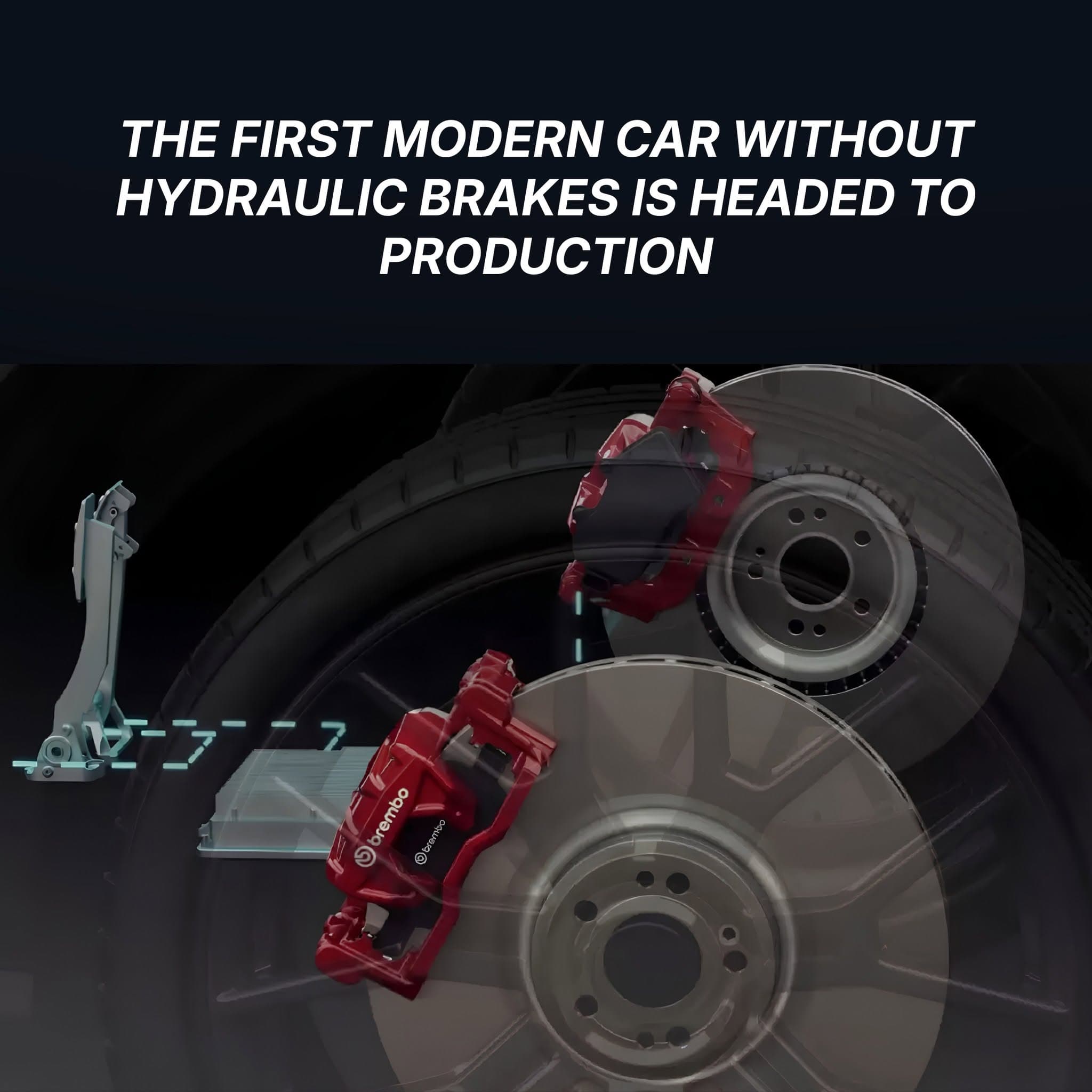
The company has unveiled Sensify, a next-generation brake-by-wire system that eliminates traditional hydraulic circuits and replaces them with software-controlled electronic systems and electric actuators.
The timing is significant.
Modern EVs and hybrids already depend heavily on regenerative braking, where electric motors slow the vehicle while recovering energy. According to BMW AG, drivers of many current EVs rarely need to use the mechanical braking system during normal driving, as regenerative braking handles much of the deceleration.
Sensify builds on this evolution by moving braking closer to a fully digital architecture.
Potential advantages include:
• More precise and customizable braking performance
• Reduced vehicle weight and mechanical complexity
• Improved integration with ADAS and autonomous driving systems
• Faster software updates and feature enhancements
• Better coordination between regenerative and friction braking
The technology also aligns with the industry's transition toward software-defined vehicles, where core vehicle functions are increasingly managed through software rather than purely mechanical components.
Perhaps the most interesting detail is that Brembo has already started series production with a major global automaker, although the company has not yet revealed which manufacturer is using the technology first.
However, one key question remains: redundancy and safety.
Traditional hydraulic braking systems have decades of proven reliability and mechanical backup capabilities. For brake-by-wire technology to gain widespread acceptance, manufacturers will need to demonstrate robust fail-safe systems that ensure braking remains available even in the event of electrical or software failures.
If successful, Sensify could become one of the most important automotive innovations of the decade—not because it makes cars faster, but because it transforms one of the vehicle's most critical safety systems into a fully digital platform.
The automotive industry has already moved from mechanical throttles to electronic throttle-by-wire systems and from hydraulic steering to electric power steering. Brake-by-wire may be the next major step in that evolution.
Would you trust a vehicle with no traditional hydraulic braking system, or do you think mechanical backups will always be necessary?